




7 Best Omnichannel Customer Engagement Platforms (2027): Features & Pricing
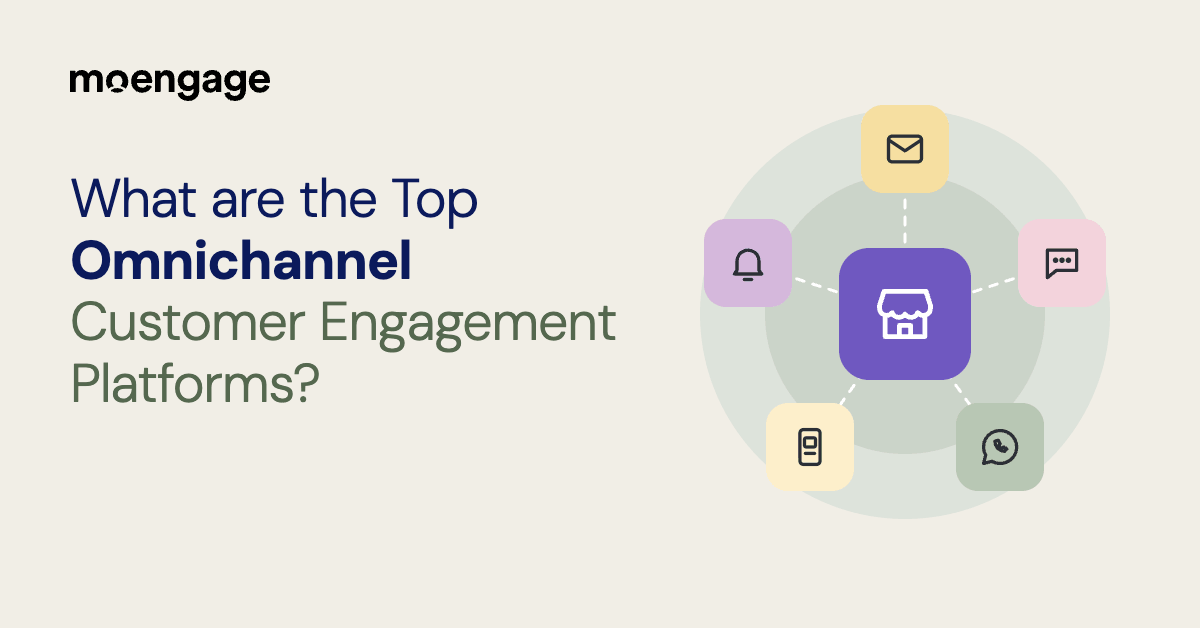
Omnichannel customer engagement platforms help marketing teams connect customer data, AI, customer journeys, and messaging across email, SMS, mobile push, in-app messaging, web, WhatsApp, and other touchpoints.
But choosing one isn’t as simple as picking the platform with the longest feature list. That’s why the “best” platform depends on your business model, customer journey, technology stack, and marketing goals.
In this guide, we compare the best omnichannel customer engagement software for 2027, including MoEngage, Braze, Salesforce Marketing Cloud, Adobe Journey Optimizer, Iterable, Insider, and Klaviyo.
We’ll explain what each platform is best at, which industries it serves well, how the leading vendors compare, and what enterprise and mid-market marketing teams should evaluate before booking a demo.
Top Omnichannel Customer Engagement Platforms at a Glance
Here’s the quick comparison before we get into each omnichannel customer engagement solution.
| Omnichannel engagement platform | Gartner rating | Best for | Core channels | Best fit |
| MoEngage | 4.6/5 | Agentic journey orchestration across all channels | Web, app, email, SMS, push, in-app, WhatsApp | Mid-market and enterprise B2C brands |
| Braze | 4.4/5 | High-volume, mobile-first messaging | Push, email, SMS, in-app, WhatsApp | Large consumer brands |
| Insider One | 4.9/5 | Built-in CDP plus on-site personalization | Web, app, email, SMS, WhatsApp | Retail, travel, and fintech brands |
| Salesforce Marketing Cloud | 4.3/5 | Enterprises already on Salesforce | Email, SMS, push, web | Salesforce-centric enterprises |
| Adobe Journey Optimizer | 4.3/5 | Adobe-stack enterprises | Email, push, in-app, SMS, web | Adobe-centric enterprises |
| Iterable | 4.4/5 | Flexible journeys and data APIs | Email, SMS, push, in-app, web push | Mid-market and enterprise apps |
| Klaviyo | 4.7/5 | Ecommerce email and SMS | Email, SMS, push | Ecommerce and Shopify brands |

Let’s start with the basics.
What is Omnichannel Customer Engagement Software?
Omnichannel customer engagement software is software that helps brands collect customer signals, create unified profiles, orchestrate journeys, and deliver coordinated experiences across channels such as email, SMS, mobile push, in-app messaging, web push, WhatsApp, and web experiences.
A true omnichannel customer engagement platform does more than send messages from multiple channels. It connects those channels through shared customer data and journey logic.
For example, if a customer opens a mobile app, abandons a booking, receives a push notification, and then completes the purchase, the platform should understand that sequence. It should stop irrelevant reminders, update the customer profile, and trigger the next useful experience.
How We Evaluated the Best Omnichannel Customer Engagement Platforms
The right platform depends on fit, not just brand recognition.
That’s why we evaluated each omnichannel customer engagement platform against the capabilities that matter most to B2C mid-market and enterprise marketing teams:
| Evaluation area | What we assessed |
| Customer data | Can the platform unify behavioral, transactional, CRM, and product data? |
| Identity resolution | Can it recognize customers across devices, channels, and anonymous-to-known journeys? |
| Journey orchestration | Can marketers build branching, event-triggered, cross-channel journeys? |
| AI and automation | Can AI support segmentation, personalization, next-best action, content, and optimization? |
| Channel coverage | Does it support the channels your customers actually use? |
| Consent management | Can it manage opt-ins, opt-outs, preferences, and frequency controls? |
| Analytics | Can it measure conversion, retention, revenue, journey performance, and incremental lift? |
| Integrations | Does it connect with your CRM, ecommerce platform, data warehouse, and service tools? |
| Enterprise readiness | Does it support security, governance, scalability, APIs, and implementation requirements? |
These criteria separate a true omnichannel customer engagement software from a collection of disconnected messaging tools.
What Capabilities Should Enterprises Require When Evaluating Omnichannel Customer Engagement Platforms?
Enterprises should require six capabilities: a unified customer profile, cross-channel customer journey orchestration, real-time personalization, AI that acts (not just suggests), native channel coverage, and cross-channel reporting that ties messages to revenue.
| Enterprise capability | What to ask in the omnichannel engagement platform demo | Red flag |
| Unified customer profile | “Show me one customer’s activity from web, app, and email in one view.” | Data lives in separate modules |
| Cross-channel journeys | “Build one journey that moves a customer from email to push to SMS.” | Each channel has its own builder |
| Real-time personalization | “How fast does a cart action change the next message?” | Updates take hours |
| AI that does the work | “Can AI build the segment and draft the campaign for me?” | AI only writes subject lines |
| Native channels | “Which channels are built in versus partner add-ons?” | Key channels need third-party tools |
| Cross-channel reporting | “Show me revenue per journey, not per channel.” | Only opens and clicks |
Treat this table like Hermione’s study guide. If a vendor can’t pass these six, move on. Two more things matter in the real world: how long onboarding takes, and whether you’ll get a real human when something breaks. Your team will feel those every single week.
Feature checklists are useful, but the real question is whether the platform can help your team create better, personalized customer experiences without creating a new maze of work.
1. Unified Customer Profiles and Identity Resolution
Your platform should combine customer attributes, behavioral events, transactions, preferences, campaign activity, and product usage into a consistent profile.
It should also recognize that the same customer may interact through multiple devices, email addresses, accounts, or anonymous sessions. If your system treats one person as four unrelated profiles, your personalized marketing strategy is already wearing a disguise.
2. Cross-channel Journey Orchestration
Look for visual customer journey mapping tools that support triggers, branching logic, wait steps, event conditions, frequency caps, suppression rules, and human review.
A customer who completes a purchase should not continue receiving abandoned-cart reminders. A traveler who changes a booking should not receive a campaign promoting the booking they just modified. Journey logic should respond to reality.
3. Real-time Behavioral Activation
The platform should react to meaningful customer actions such as:
- Product views
- Cart activity
- Purchases
- Subscription changes
- App sessions
- Content consumption
- Support events
- Loyalty milestones
- Booking behavior
- Inactivity or churn signals
Batch campaigns still have a place, but real-time signals are what make B2C customer engagement feel relevant rather than scheduled.
4. Agentic AI with Human Control
Agentic AI in marketing should help your team make better decisions, not launch unpredictable campaigns into the wild.
Evaluate whether the platform can use AI for audience discovery, content generation, personalization, next-best-action recommendations, send-time optimization, journey creation, campaign analysis, and predictive segmentation.
Also ask:
- Can marketers approve AI-generated changes?
- Are brand guidelines and compliance rules supported?
- Can you audit AI decisions?
- Can you set frequency and channel guardrails?
- Does AI work across channels, or only in one feature?
5. Consent and preference management
For enterprise and mid-market brands, consent management (like the new TCPA rules for SMS compliance) is essential across email, SMS, push notifications, WhatsApp, and other channels.
The platform should support opt-ins, opt-outs, channel preferences, suppression lists, frequency controls, and regional requirements. A customer who says “not today” shouldn’t receive the same message through three other channels 5 minutes later.
6. Experimentation and incremental measurement
Omnichannel customer engagement metrics like open rates and clicks are useful, but they don’t tell the whole story.
Enterprise teams should look for A/B testing, holdout groups, control groups, journey-level reporting, conversion measurement, revenue attribution, retention analysis, and incremental lift.
The best omnichannel customer engagement solution helps you answer, “Did this journey cause a better outcome?” Not just, “Did someone click?”
7. APIs, integrations, and data portability
A strong API matters when your workflows involve Ecommerce systems, CRMs, data warehouses, loyalty platforms, customer support tools, analytics systems, or custom applications.
Ask vendors to demonstrate:
- Event ingestion
- Profile updates
- Audience synchronization
- Campaign triggers
- Webhooks
- Data exports
- Authentication
- Rate limits
- Error handling
- Documentation quality
The best omnichannel customer engagement platforms should fit into your martech stack, instead of demanding that your entire stack join their ecosystem.
8. Security, governance, and scalability
Enterprise buyers should evaluate role-based access, SSO, audit logs, data retention, encryption, privacy controls, uptime commitments, regional data requirements, and support SLAs.
You should also test whether the platform can handle your expected audience size, event volume, message volume, peak seasonal traffic, and organizational structure.
What are the Best Tools for Managing Omnichannel Customer Engagement?
We looked at which platforms genuinely orchestrate customer journeys across channels. The right choice depends on your data setup and team size.
Now let’s look at the omnichannel customer engagement platforms in more detail.
1. MoEngage: Best for Agentic Journey Orchestration Across Every Channel
MoEngage is an agentic customer engagement platform that gives every customer one profile, reaches them on every channel from one place, and uses AI agents to handle the busywork. Your team plans and launches journeys without waiting on engineering.
As an omnichannel customer engagement platform, MoEngage’s warehouse-native CDP pulls in data from your website, mobile app, data warehouse, and other tools, then merges it into one profile per customer. Every channel works off that same profile. That includes mobile push, web push, email, SMS, RCS, MMS, in-app messages, on-site pop-ups, Content cards, WhatsApp, and ad audiences for Facebook and Google.
The piece that ties it together is Flows, MoEngage’s journey builder. You drag out one journey, and it can run across several channels at once. You can also set the journey to stop the moment a customer converts, so someone who just bought doesn’t get the “still thinking it over?” nudge.
Key features:
- MoEngage merges website, app, email, and purchase data into a single record for each person, so every channel and every teammate works from the same facts.
- MoEngage Flows, a drag-and-drop visual journey builder
- 16+ native channels
- MoEngage’s Merlin AI native agents and custom agents can build segments, draft push and email campaigns, check campaigns before they send (with a go, go with fixes, or no-go verdict), and generate performance reports.
- Most Preferred Channel and Best Time to Send look at each customer’s recent engagement to pick the channel they respond to most and the hour they’re likely to open. Next Best Action applies both inside a journey.
- Web personalization and smart recommendations change what a visitor sees on your site, and recommend products based on what they’ve browsed or bought.
- Built-in analytics, including funnels, retention reports, and journey dashboards
Pricing:
MoEngage is priced on monthly tracked users (MTUs), with Growth and Enterprise plans.
Pros:
- Your team doesn’t have to stitch together a data tool, a messaging tool, and an analytics tool.
- Agents create segments, journeys, and campaign drafts, not just subject lines, which saves lean teams hours each week.
- Frequency caps, quiet hours, and exit-on-conversion across channels protect customers from over-messaging and protect your SMS budget.
- A dedicated migration support team moves your campaigns over. SoundCloud moved 200+ campaigns in 12 weeks to MoEngage.
Cons:
A team that only sends email and SMS may not need this much platform.
Best for:
Mid-market and enterprise B2C brands that want a single platform for every channel and AI that does real work.
2. Braze: Best for High-Volume, Mobile-First Messaging
Braze is a long-time heavyweight for consumer brands that send a lot of messages, especially push and in-app. It’s omnichannel because its data platform feeds one customer profile into Canvas, its journey builder, so a single journey can mix email, push, SMS, RCS, WhatsApp, in-app messages, and content cards, plus regional apps like LINE and KakaoTalk.
It’s an engagement platform, not just a sender, because it adds the data, AI, and reporting layers around those messages. BrazeAI includes a decisioning product that learns which message works best for each customer, plus AI agents and an agent console on higher tiers.
If your app is your business, Braze belongs on your list. Braze alternatives with comparable real-time orchestration include MoEngage, Iterable, and Insider One, which tend to come up when teams want a different pricing model or less engineering effort during setup.
Key features:
- Canvas Flow, a visual canvas where you map out every step of a journey, including splits, waits, and which channel each message uses.
- Customer actions update their profile right away, so the next message reflects what they just did, not what they did yesterday.
- Wide channel coverage, with email, push, SMS, MMS, RCS, WhatsApp, in-app messages, content cards (message feeds inside your app), and regional apps like LINE and KakaoTalk.
- BrazeAI, an AI suite whose decisioning tool uses machine learning to test message variations and learn which one works best for each customer, plus AI agents you can manage from an agent console on higher tiers.
Pricing:
Contracts combine an edition (Go, Select, Pro, or Enterprise), your monthly active users (MAUs), and Action Credits. Action Credits are a pool you spend across channels and AI features, and each action uses a different number of credits.
Pros:
- Messages react to customer behavior as it happens, which matters for things like flash sales and order updates.
- Strong mobile messaging, including push and in-app messaging
Cons:
- Heavier setup than other omnichannel customer engagement software on this list (apart from legacy platforms), as implementation can ask a lot of your team.
- On-site personalization is certainly not one of its strengths
Best for:
Consumer brands with app-heavy engagement.
3. Insider One: Best for Built-In CDP and On-Site Personalization
Insider One is a customer engagement platform that builds the customer data platform (CDP) into the same product as the messaging, as MoEngage does. That’s what makes it omnichannel: the profile, the journey builder (called Architect), and 12+ native channels, including web, app, email, SMS, WhatsApp, and site search, all share one data layer.
Its AI layer predicts what each customer is likely to do next, and its Agent One suite adds AI agents for shopping, support, and insights. Architect even includes next-best-channel routing, which picks the channel per customer.
That’s useful if your customer data is scattered and you want it fixed in the same purchase. It’s popular with retail, travel, and financial services brands.
Key features:
- Built-in customer data platform (CDP), a tool that gathers customer data from your site, app, and other systems into one profile
- Architect, a drag-and-drop canvas for multi-step journeys
- 12+ native channels, including web, app, email, SMS, WhatsApp, web push, and site search, all working from the same profile.
- Predictive AI models that estimate what each customer is likely to do next, such as buy or drift away, so you can target before it happens.
- A Shopping Agent that answers product questions on your website, WhatsApp, and Instagram, a Support Agent that handles service questions, and an Insights Agent that surfaces findings from your data.
- On-site personalization and site search
Pricing:
Quote-based and tied to monthly active users.
Pros:
- Data, personalization, and channels in one contract
- On-site search and recommendations go beyond messaging.
- Conversational AI agents, where shoppers can get answers in chat channels, and those conversations feed back into your segments.
Con:
Individual features may be less deep than those of best-of-breed tools.
Best for:
Teams that want data unification and personalization bundled together.
4. Salesforce Marketing Cloud: Best for Enterprises Already on Salesforce
Salesforce Marketing Cloud is an enterprise customer engagement platform that ties marketing to the same customer record your sales and service teams already use. It’s omnichannel because Journey Builder coordinates email, mobile push, SMS, and WhatsApp (with two-way SMS and WhatsApp conversations), and its personalization tools extend to the web.
The newer Marketing Cloud Next brings Agentforce AI agents that can create campaigns and build segments from plain-language prompts, and it adds cross-journey orchestration so one journey can trigger another.
The draw is a shared customer view across marketing, sales, and service. The trade-off is complexity: many teams need an admin or partner to get full value. That’s why Salesforce Marketing Cloud alternatives such as MoEngage are common picks for B2C teams that want faster launches and marketer-friendly tooling without a heavy implementation.
Key features:
- Journey Builder, a canvas for mapping multi-step journeys across email, mobile messaging, and more.
- You describe a campaign in plain language, and Salesforce’s AI agents draft the content and audience and help optimize it.
- Data Cloud pulls customer data from Salesforce Sales, Service, and Commerce into your marketing, so a campaign can use what support or sales already knows.
- Two-way WhatsApp and SMS conversations
- Einstein AI that predicts the best time to send, how engaged each customer is, and how often to message them.
- Cross-journey orchestration lets one journey trigger another based on behavior or goals, so a customer doesn’t end up in conflicting journeys.
- Cross-channel analytics dashboards that show how journeys perform across channels.
Pricing:
Salesforce publishes Engagement+ editions: Pro+ at $2,000, Corporate+ at $5,500, and Enterprise+ at $30,000 per org per month, billed annually. Each edition includes set allowances for emails, contacts, and Data Cloud credits. Personalization ($15,000 per month) and analytics ($11,000 per month) packages cost extra, and the Premier Success Plan adds 30% of license fees.
Pros:
- Marketing, sales, and service see the same customer record.
- Agentforce and Data Cloud are among the most developed ecosystems on this list of omnichannel customer engagement platforms.
Cons:
- Steep learning curve, and many teams need an admin or partner to get full value.
- Costs stack up, with personalization, analytics, and support plans adding to the base edition.
- You get the best value only inside Salesforce. Outside that ecosystem, integration work grows.
Best for:
Large enterprises already invested in Salesforce.
5. Adobe Journey Optimizer: Best for Real-Time Orchestration Inside the Adobe Stack
Adobe Journey Optimizer (AJO) is an enterprise customer engagement platform built on Adobe Experience Platform. It’s omnichannel because real-time customer profiles feed a single journey canvas that natively covers email, SMS, and MMS, push, in-app messages, web, and mobile content cards. Channels like WhatsApp connect through custom actions rather than native support.
It handles both scheduled campaigns and real-time, behavior-triggered messages, and it adds offer decisioning to pick the next best offer for each person.
It’s powerful, and it shines when you already use other Adobe products. Outside that ecosystem, expect more setup. Adobe Marketing Cloud alternatives like MoEngage and Iterable appeal to marketers who want journey orchestration without committing to the full Adobe stack.
Key features:
- Built on Adobe Experience Platform, it merges customer data into live profiles and lets you build audiences visually, with no code.
- One tool for both scheduled campaigns and real-time, behavior-triggered messages, such as a cart-abandonment email the moment someone leaves your site.
- Native channels include email, SMS and MMS, push, in-app messages, web, content cards (messages embedded in your app), and code-based experiences. WhatsApp connects through custom actions.
- Offer decisioning and next best offer
- AI picks the best send time per person, and location triggers fire when someone is near a store or venue.
- Email deliverability management tools that protect your email sender reputation, so messages reach the inbox.
- Journey insights reports on delivery and engagement by channel and by step, so you can see where a journey works or breaks.
Pricing:
Three packages: Select (the essentials), Prime (adds more real-time features), and Ultimate (adds offer decisioning and more AI tools).
Pros:
- Enterprise-grade governance, with strong privacy and data controls for regulated or complex organizations.
- Powerful real-time decisioning, with live profiles and next-best-offer logic for one-to-one experiences.
- It connects with Adobe’s analytics and content tools.
Cons:
- Heavy lift without technical support
- WhatsApp and similar channels use custom connections.
- Value drops outside the Adobe stack.
Best for:
Enterprises with Adobe Experience Cloud already in place.
6. Iterable: Best for Flexible Cross-Channel Journeys and Data Control
Iterable is a cross-channel customer communication platform known for an approachable journey builder called Studio. It’s omnichannel because one journey can span email, SMS, push, in-app messages, web push, and embedded messaging, all drawing on the same behavioral and product data, with WhatsApp support appearing in recent reviews.
Its AI layer, Nova Intelligence, includes agents that build journeys, write personalization logic, and run experiments, plus decisioning that picks the best channel and send time per person and a Brand Affinity score for loyalty. It suits mid-market teams that want flexibility without a giant implementation.
Iterable alternatives such as MoEngage tend to come up when teams want more native channels or on-site personalization alongside messaging. Fastic, a health and fitness app, is one example: it moved from Iterable to MoEngage in 3 weeks after finding the analytics didn’t fit its use cases, and saw a 35% increase in subscription purchases from disengaged app users.
Key features:
- Studio, a visual canvas where you set up journeys with branching paths, wait steps, and A/B tests, triggered by what customers do.
- Cross-channel messaging, including email, SMS, push, in-app messages, web push, and embedded messaging (messages built into your app or site), with WhatsApp appearing in recent reviews.
- Nova AI Agents that draft journeys, write personalization logic, review campaigns for mistakes before launch, and run experiments.
- Nova Decisioning, which picks the best channel and send time for each person.
- Catalog, a product data feed that lets messages show current items, prices, and recommendations.
Pricing:
Contracts are sized by monthly active users and the channels you activate. Nova AI is bundled in for all customers.
Pros:
- Iterable is widely seen as approachable for mid-market teams.
- You can connect your own data sources without a heavy rebuild.
Cons:
- Reporting is shallow, with many teams exporting data to a warehouse for deeper analysis.
- Less on-site personalization depth
Best for:
Teams that want control over data and a user-friendly journey builder.
7. Klaviyo: Best for Ecommerce Email and SMS Engagement
Klaviyo is a B2C CRM, built around Ecommerce data. It’s omnichannel because it pairs email and SMS with deep order and browsing data, so abandoned cart and winback flows are quick to launch.
It’s an engagement platform because it also includes predictive analytics (like lifetime value and churn), send-time optimization, and AI tools: Composer builds campaigns from a plain-language prompt, and Customer Agent answers shopper questions.
It’s great at what it does, but it’s narrower than most of the omnichannel customer engagement platforms on this list.
Klaviyo alternatives for Shopify and other Ecommerce brands that have outgrown email and SMS include MoEngage, which adds app, web, and broader omnichannel logic.
Key features:
- Pre-built flows for common moments like abandoned carts, welcome series, and winbacks, so you launch without building from scratch.
- Channels: email, SMS and MMS, RCS, mobile push, and WhatsApp.
- Forecasts like each customer’s expected lifetime value and chance of churning, so you can spot your best customers and at-risk ones.
- Composer, an AI marketing agent that builds a campaign from a prompt, including the audience, email copy, subject lines, and an SMS follow-up.
- Deep Ecommerce integrations, especially with Shopify, so order and catalog data flow in automatically.
Pricing:
Free up to 250 active profiles. Paid email plans start around $20 per month for 500 active profiles and rise with your profile count. SMS, MMS, WhatsApp, and RCS bill separately by credit, and AI tools, the advanced CDP, reviews, and helpdesk are priced as add-ons.
Pros:
- Fast to launch on Shopify
- Targeting and predictions are built around purchase behavior.
Cons:
- Klaviyo pricing climbs with your list of active profiles, including inactive and dormant profiles, and CDP add-ons stack on top.
- Narrower for app and on-site personalization
Best for:
Small Ecommerce brands focused on email and SMS.
Best Omnichannel Customer Engagement Platform Vendors in Martech for Email + SMS
Plenty of teams don’t need 12 channels. They need email and SMS to work together without double-texting their best customers.
Email is where most of these teams start, and it’s also where many first run into Salesforce Marketing Cloud’s learning curve. Marketers who want enterprise-grade email without needing an admin for every journey tweak often start comparing Salesforce Marketing Cloud alternatives for email marketing that put email and SMS in the same journey builder, which is how platforms like MoEngage and Iterable usually enter the conversation.
Here’s how the leading omnichannel customer engagement platforms handle that pair.
| Platform | Why it works for email + SMS | Strongest at |
| MoEngage | Email and SMS live in the same journeys, with logic to avoid duplicate sends | Coordinating channels so one trigger doesn’t fire twice |
| Klaviyo | Native Ecommerce data feeding both channels | Fast cart, browse, and winback flows |
| Braze | Email, SMS, and RCS in one canvas | High-volume sends with real-time data |
| Iterable | Email and SMS in a visual workflow builder | Flexible journeys with data control |
MoEngage earns its spot when you’re tired of the “email and a text for the same abandoned cart” problem. Because both channels sit inside one journey, you can send a text first, hold the email, and only fall back if the customer doesn’t act. That’s the logic that protects your SMS budget and your customers’ patience.
Klaviyo is the fastest way to get email and SMS flows live if you’re on Shopify, thanks to native order and catalog data.
Braze fits teams sending at serious volume that want email, SMS, and RCS orchestrated together.
Iterable suits teams that want a flexible journey builder and control over their own data feeds.
If email and SMS are all you need today, Klaviyo or Iterable may be plenty. If you know push, web, or in-app are coming, start on an omnichannel customer engagement platform that already has them, like MoEngage.
Best Omnichannel Customer Engagement Platforms by Industry
Different industries need different things from their platforms. Here’s how we’d match them up.
| Industry | What matters most | Omnichannel engagement platforms worth a look |
| Travel and hospitality | Real-time triggers, app and web | MoEngage, Braze, Insider One |
| Regional banks | Governance, security, consent | MoEngage, Salesforce Marketing Cloud, Adobe |
| Media and communications | Retention, subscriptions, app engagement | MoEngage, Braze, Iterable |
| Sports and entertainment | Event-driven messaging, fan loyalty | MoEngage, Braze, Insider One |
| Ecommerce | Cart, browse, and purchase triggers | MoEngage, Klaviyo, Insider One |
This table shows patterns, not rules. Always run a demo with your own data.
Omnichannel Customer Engagement Platform for Travel and Hospitality
Travel and hospitality brands need to coordinate engagement around searches, bookings, cancellations, upgrades, loyalty status, trip dates, and real-time service events.
| Omnichannel engagement platform | Why it is a strong fit for travel and hospitality |
| MoEngage | Supports behavior-based journeys across push, email, SMS, in-app, and web. It can help enterprise travel brands personalize pre-booking, booking, pre-arrival, in-stay, post-stay, and loyalty journeys using customer behavior and event data. |
| Braze | Strong for mobile-first travel experiences, including app engagement, booking reminders, real-time push notifications, location-aware campaigns, and loyalty communication. |
| Insider | Useful for personalizing destination discovery, website experiences, offers, and cross-channel journeys based on browsing and booking behavior. |
The most important capabilities for this industry include booking-system integrations, real-time event processing, loyalty data, timezone handling, localization, mobile push, SMS, and suppression logic.
For example, once a customer completes a booking, the platform should stop acquisition reminders and move the customer into a confirmation, preparation, upgrade, or pre-arrival journey.
You want a platform that reacts to real-time events and shifts channels fast, like a push at the airport and an email at home.
MoEngage fits because journeys react to real-time behavior across app, web, and messaging, and you can set a channel order (push first, then SMS, then email) so a time-sensitive alert actually lands. Travelodge, the UK budget hotel brand, used MoEngage to rebuild its post-booking emails around guest data like trip type and stay type. The results: a 354% year-over-year increase in post-booking email revenue, an 87% click-through rate on pre-arrival emails, and £4.3 million in post-booking revenue in the first half of 2024.
Braze earns its place with real-time data streaming and strong in-app and push, which suits app-first travel brands.
Insider One works for booking-funnel brands that want web personalization and a built-in CDP, so a browsed destination can shape the homepage and the next email.
Omnichannel Customer Engagement Platform for Regional Banks
Regional banks need personalized engagement. But they also need strong security, governance, privacy, consent, and auditability.
| Omnichannel engagement platform | Why it is a strong fit for regional banks |
| MoEngage | Can support onboarding, card activation, direct deposit, financial education, cross-sell, dormant account reactivation, and retention journeys across email, SMS, push, and in-app channels. |
| Salesforce Marketing Cloud | Strong for banks already using Salesforce CRM and needing engagement connected to customer service, relationship management, account data, and sales workflows. |
| Adobe Journey Optimizer | Useful for large financial institutions that need real-time profiles, sophisticated personalization, decisioning, and enterprise governance within the Adobe ecosystem. |
The omnichannel customer engagement platform for regional banks should help the bank deliver relevant messages without exposing sensitive information or creating conflicting communications across channels.
MoEngage is a fit for banks that want marketer-friendly journeys with consent and preference handling, and we work with financial brands like Fidelity.
Salesforce Marketing Cloud makes sense when service and relationship data already live in Salesforce, giving advisors and marketers one customer record.
Adobe Journey Optimizer suits larger institutions that need strict data governance on top of real-time profiles.
Omnichannel Customer Engagement Platform for Media and Communications
If you sell subscriptions, you live and die by retention. You need journeys that nudge a lapsing viewer back, welcome new subscribers, and recommend what to watch next. Think Netflix’s “Are you still watching?” but smarter.
| Omnichannel engagement platform | Why it is a strong fit for media and communications |
| MoEngage | Supports content engagement, app adoption, trial conversion, subscription onboarding, re-engagement, and churn prevention across push, email, in-app, SMS, and web. |
| Braze | Strong for real-time mobile and content engagement, including push notifications, in-app messages, personalized content, and subscription journeys. |
| Iterable | Useful for flexible onboarding, trial conversion, content recommendations, renewal, and reactivation journeys. |
The most important capabilities include content and product event tracking, subscription data, real-time behavioral triggers, push notifications, identity resolution, experimentation, and churn prediction.
MoEngage works here because behavior-based segments and journeys can catch a drop in engagement early, and we work with enterprise media and communications brands like Deutsche Telekom.
Telekom Romania, a Deutsche Telekom subsidiary, used MoEngage’s Merlin AI to write push notification copy for its prepaid activation campaigns. The AI learned from past campaign performance, and after one month, click-through rates rose 65%. The team also saved about 15 billable hours a month on manual copywriting. A sister company, Telekom Macedonia, grew click-through rates 132% across 50+ campaigns while sending 35% fewer notifications using MoEngage.
Braze is a natural fit for streaming and media apps that live on push and in-app.
Iterable is popular with media and streaming teams that want a flexible builder and clean data connections.
Omnichannel Customer Engagement Platform for Sports and Entertainment
Game days and ticket drops create huge spikes. You need event-based triggers, loyalty messaging, and the ability to reach fans across app, email, and SMS on a tight clock.
| Omnichannel engagement platform | Why it is a strong fit for sports and entertainment |
| MoEngage | Supports game-day, event-day, ticketing, merchandise, loyalty, app engagement, renewal, and fan reactivation journeys across push, email, SMS, in-app, and web. |
| Braze | Strong for mobile-first fan experiences, real-time alerts, personalized content, location-aware messaging, and app-based engagement. |
| Insider | Useful for personalized digital experiences, content recommendations, merchandise promotion, and web-to-app engagement. |
Look for omnichannel customer engagement platforms that handle burst volume and personalization together.
MoEngage fits teams that want fan journeys across app, email, SMS, and web in one place, from ticket on-sale alerts to post-event offers. Foxwoods Resort Casino, one of North America’s largest resort destinations, wanted its digital messages to feel as personal as its on-property service. After moving to MoEngage, it launched campaigns 3x faster and lifted email open rates by about 5 percentage points within a few months. A guest who buys a digital gift card now gets it instantly as part of a connected flow instead of through manual coordination.
Braze brings strong real-time and app-messaging chops for high-volume moments.
Insider One helps when you want on-site personalization and a unified fan profile together, like a merch offer tied to the last game someone attended.
E-Commerce Marketing Platform for Omnichannel Customer Engagement
Ecommerce brands need to connect product catalogs, browsing behavior, transactions, promotions, loyalty, inventory, and customer service data.
| Omnichannel engagement platform | Why it is a strong fit for Ecommerce |
| MoEngage | Better suited to ecommerce brands that need broader orchestration across email, SMS, push, in-app, web, personalization, experimentation, and retention journeys. |
| Klaviyo | Better suited for ecommerce email and SMS, purchase-based segmentation, abandoned-cart flows, customer profiles, product recommendations, and revenue-focused reporting. |
| Insider | Useful for combining website personalization, predictive targeting, product discovery, and messaging across digital channels. |
The best Ecommerce marketing platform for omnichannel customer engagement should support browse abandonment, cart recovery, post-purchase education, replenishment, loyalty, back-in-stock alerts, price-drop notifications, cross-sell, and win-back journeys.
Most importantly, it should recognize when a customer has already purchased. Sending a cart reminder after checkout is not a personalization strategy. It’s how your brand ends up in the customer’s “maybe later” folder.
Klaviyo is the familiar pick because of native ecommerce data and fast flows. But it’s also where many teams hit a ceiling: once you want app push, on-site personalization, and tighter cross-channel logic, MoEngage and Insider One give you more room.
If you’re past “Send a cart email,” and into coordinating app, web, email, and SMS around a customer, you need a platform that treats the shopper as one person, not four.
MoEngage unifies those signals in one profile and runs agent-assisted campaigns on top.
Stadium Goods is a good example. The New York-founded marketplace for rare sneakers and streetwear runs a custom inventory system that’s tightly tied to Shopify, and its previous CRM tool struggled to sync that catalog cleanly. After moving to MoEngage and using its native Shopify integration, the team could set up triggers based on product views and cart activity, instead of workarounds that stuffed product IDs into a static field. As a result, Stadium Goods saw 2x year-over-year growth in triggered revenue.
So, you’ve seen the options. Here’s how to pick without losing a month of your life to demos.
How to Choose From the Top Omnichannel Customer Engagement Platforms
The right omnichannel customer engagement platform depends on your business model, current stack, customer journey, and internal capabilities.
Use this decision framework to choose a customer engagement platform for your omnichannel use cases:
| If your primary goal is… | Start by evaluating… | Why |
| Agentic AI-powered B2C engagement | MoEngage | Combines AI-assisted orchestration, personalization, experimentation, and cross-channel engagement |
| Mobile-first enterprise engagement | Braze | Strong real-time messaging and mobile lifecycle capabilities |
| CRM-connected enterprise journeys | Salesforce Marketing Cloud | Deep connection to Salesforce customer, sales, and service data |
| Adobe-centered personalization | Adobe Journey Optimizer | Built on Adobe Experience Platform and real-time profiles |
| Ecommerce email and SMS | Klaviyo | Strong purchase-driven flows and ecommerce usability |
| Flexible lifecycle marketing | Iterable | Strong cross-channel workflows and experimentation |
| Predictive digital personalization | Insider One | Broad digital channel coverage and predictive targeting |
Start with your channels: which three matter most to your customers? Then check your data: can the platform pull in your existing sources without a six-month project? Finally, be honest about your team. A powerful omnichannel customer engagement platform is only worth it if your people can actually run it.
Before you make a decision, run a proof of concept using one high-value journey. Good candidates include onboarding, cart recovery, subscription renewal, churn prevention, or enhancing the post-purchase experience.
Measure time to launch, data accuracy, campaign performance, reporting quality, marketer independence, and the number of manual workarounds required.
Book a Demo for an Omnichannel Customer Engagement Platform
If you’re looking for an omnichannel customer engagement platform, a demo should answer more than “What features do you have?”
Ask the vendor to show:
- How a customer profile is created and updated.
- How anonymous and known users are connected.
- How an omnichannel customer journey uses real-time events.
- How email, SMS, push, in-app, and web channels work together.
- How AI recommends or automates decisions.
- How marketers add approval rules and brand guardrails.
- How consent and preferences are enforced.
- How conversion and incremental lift are measured.
- How the platform integrates with your CRM, Ecommerce platform, data warehouse, and customer service tools.
- How quickly your team can execute the customer engagement platform migration and launch its first production journey.
A strong demo should use your data model and your use case, not a fictional customer named “Test User” who has never encountered a real-world edge case.
Choosing From the Best Omnichannel Customer Engagement Platforms in 2027
The best omnichannel customer engagement platforms share one trait: they let every channel learn from every other channel, so your customers feel known instead of spammed.
If you live in Ecommerce email and SMS, Klaviyo is a solid starting point. If you’re locked into Salesforce or Adobe, their native tools make sense. If you’re app-heavy, Braze, Iterable, and Insider One are all worth a look.
And if you want a customer engagement platform that unifies your data, channels, and AI agents in one place, MoEngage should be on your shortlist.
Want to see how we’d handle your real-world omnichannel customer engagement use case? Book a demo with MoEngage today.


