

MoEngage X Truecaller
This integration sends real-time outbound data from MoEngage to Truecaller, triggering tailored campaigns across native application interfaces.Use cases
Integrating Truecaller Verified Campaigns with MoEngage helps you address the following use cases:- Deliver hyper-personalized communication: Reach customers directly during critical moments across voice calls and SMS.
- Rich media engagement: Convert traditional communication channels into interactive brand experiences using media templates and multi-format displays.
- Inspire trust with native visibility: Use Truecaller’s trusted ecosystem (Verified Caller ID, Post/Missed Call screens) to help ensure brand safety and build customer confidence before they even engage.
- Automate lifecycle segments in real time: Deliver contextual offers, onboarding messages, and transactional reminders to dynamic target audiences.
Supported Touchpoints
The table below details the native Truecaller touchpoints available for your campaigns:Integration
Prerequisites
- Active subscriptions: Your organization must have active enterprise subscriptions for both Truecaller Verified Calling and Truecaller Verified Campaigns. If you do not have an active account or subscription, contact the Truecaller business team at [email protected].
- Administrative access: Access the Truecaller for Business Console to retrieve Webhook credentials.
Step 1: Retrieve API Credentials
To retrieve your API credentials from Truecaller, perform the following steps:- Log in to the Truecaller for Business Console.
- In the left navigation pane, click Verified Campaigns, and then click Webhook Setup.
- Copy and save the following credentials:
- Organization ID: A unique 16-digit UUID.
- Webhook Token: A secure API communication token.
Step 2: Generate the Campaign JSON Payload
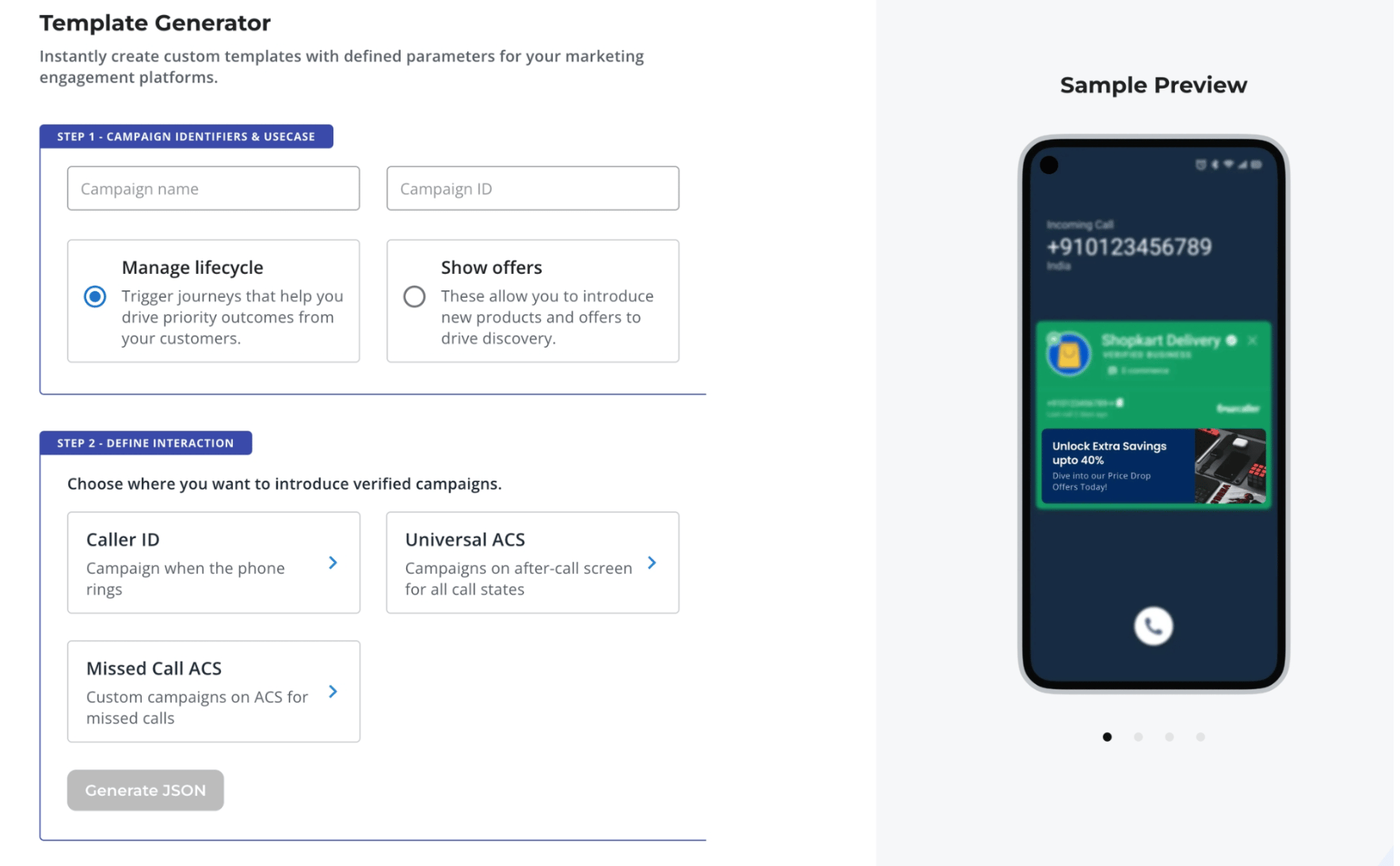
To generate the payload for your campaign, perform the following steps:- In the Truecaller for Business Console, click Verified Campaigns, and then click Template Generator.
- In Step 1 (the campaign identifiers and use case section), enter your identifiers:
- In the Campaign name box, type a descriptive name for your campaign.
- In the Campaign ID box, type a unique campaign identifier.
- Select either the Manage lifecycle option or the Show offers option, depending on your campaign use case.
- In Step 2 (the define interaction section), select where you want to introduce verified campaigns, such as Caller ID, Universal ACS, or Missed Call ACS.
- On the template configuration page, configure your display units, title, subtitle, and deep links. Then, upload your required brand assets on the Assets page.
- Click Generate JSON to open the Preview dialog box. Review the interactive device preview mockup, then click Copy to paste the payload to your clipboard.
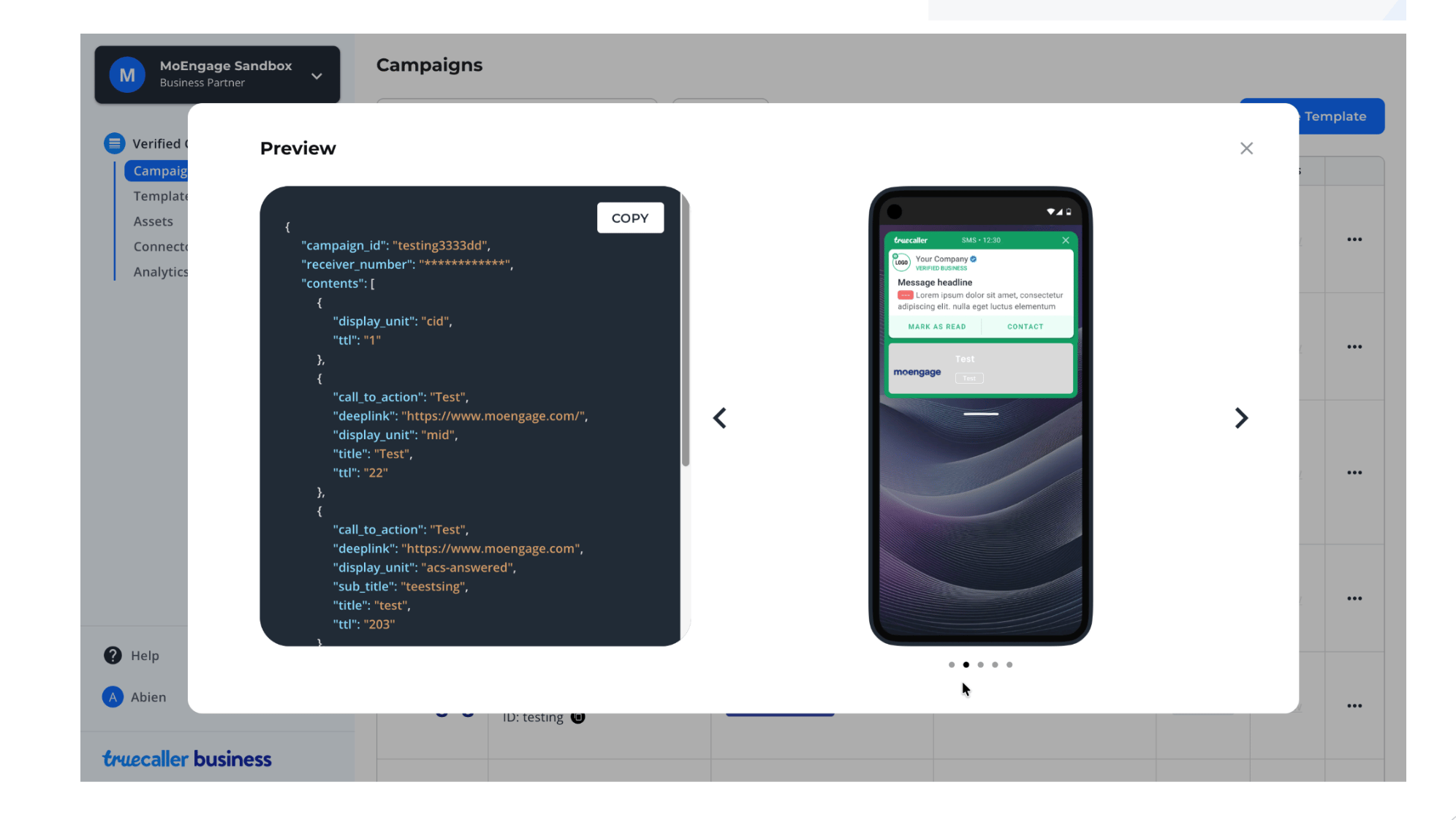
- Review the payload format in your text editor to verify that all fields, identifiers, and assets are structured correctly.
Step 3: Configure MoEngage App Marketplace
Connect Truecaller to your MoEngage workspace to start running campaign touchpoints.
- On the left navigation pane, click App Marketplace.
- On the App Marketplace page, search for Truecaller, and then click the Truecaller tile.
- Click the Integrate tab, and then click Create Campaigns.
- In the Connection details section, configure the following settings:
- Click Connect.
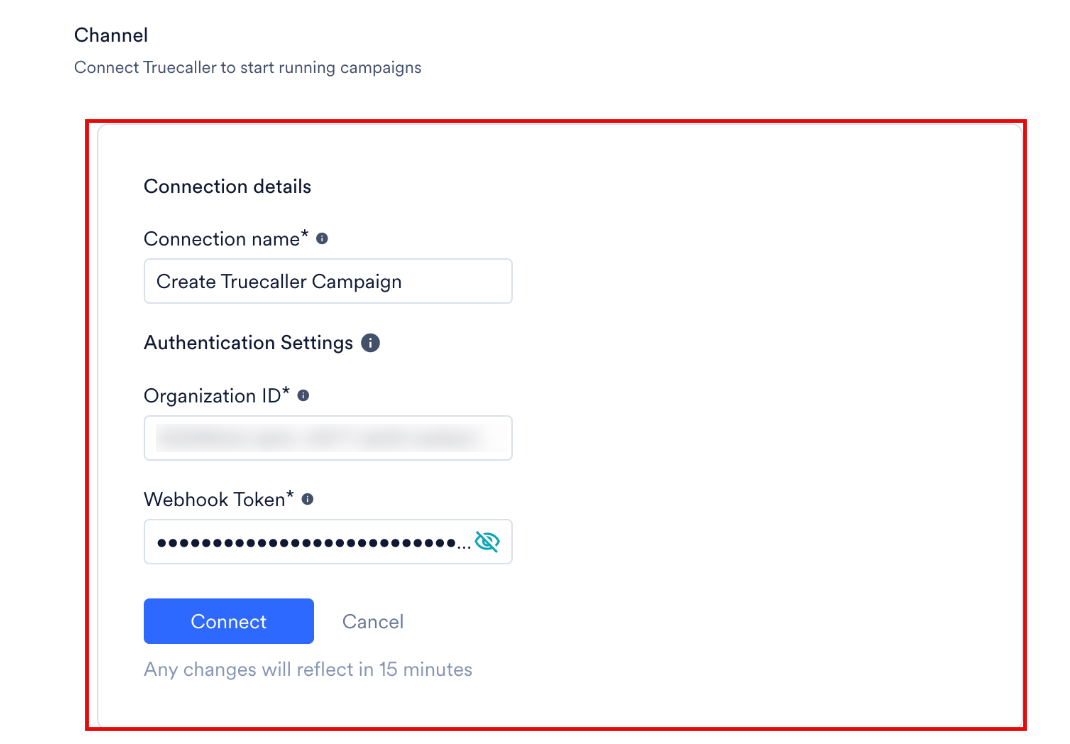
Note: Changes can take up to 15 minutes to appear in your workspace.
Step 4: Create a Campaign in MoEngage
To deliver your Truecaller campaigns to users, perform the following steps:- In the left navigation menu in the MoEngage UI, click Engage, and then click Campaigns.
- On the All campaigns page, click + Create campaign.
- In the Create campaign dialog box, under Connected Apps, click Truecaller, and then click the most suitable delivery type.
- Under Select audience, click Filter users by to define your target audience, and then click Next to proceed to the Content section.
- In the Select connector section, select Create Campaigns as the Connector, and select the appropriate connection from the Connections list, such as Create Truecaller Campaign.
- In the Content section, under Campaign Configuration, locate the Truecaller JSON Payload box.
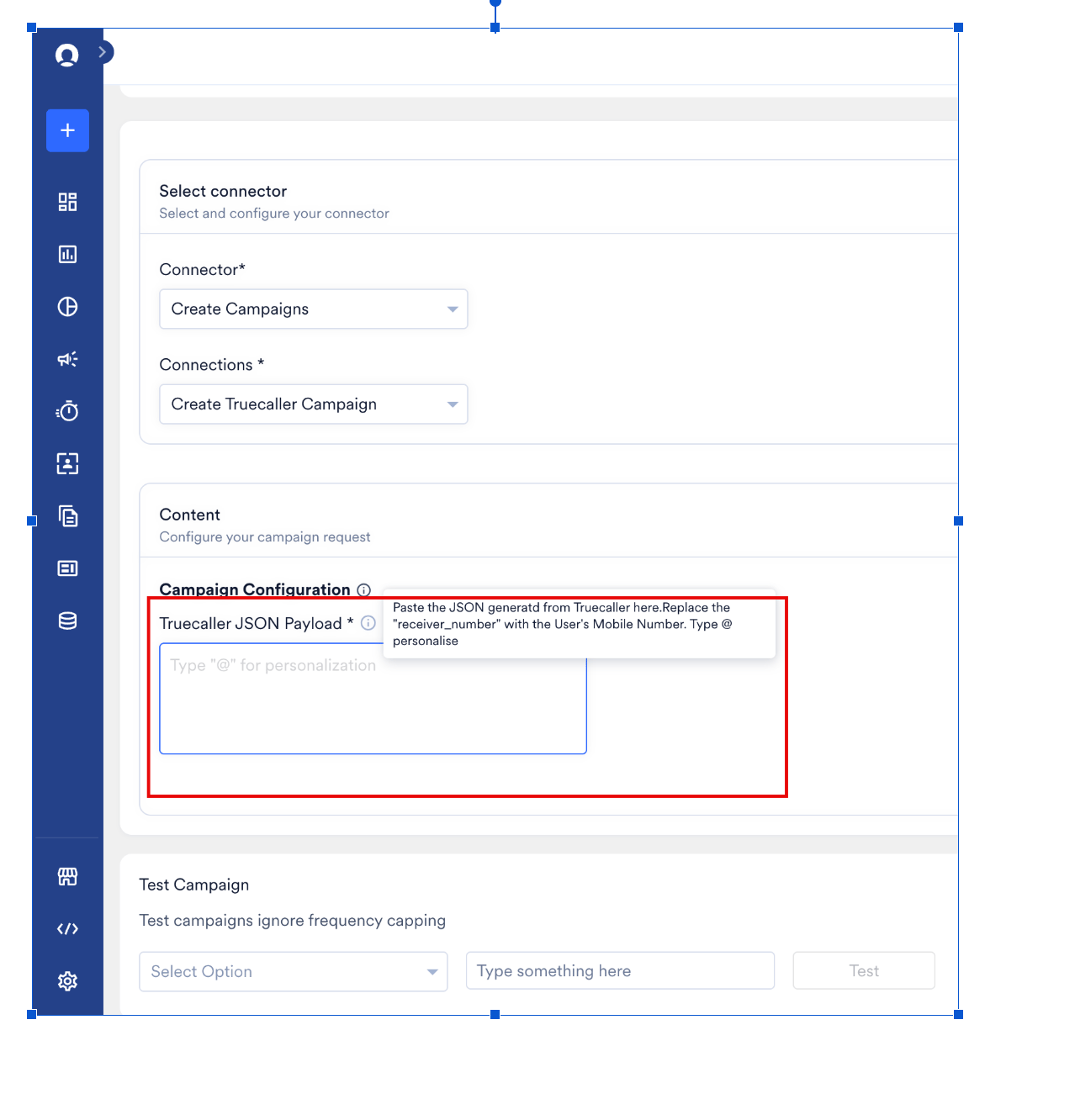
- Paste the JSON payload you copied in Step 2 into the Truecaller JSON Payload box.
- To personalize the recipient details, update the
receiver_numberkey with the MoEngage standardized mobile number attribute:"receiver_number": "{{UserAttribute['Mobile Number (Standardized)']}}". You can use the @ key in the text box to search for and select other user attributes if you use a different custom phone number attribute.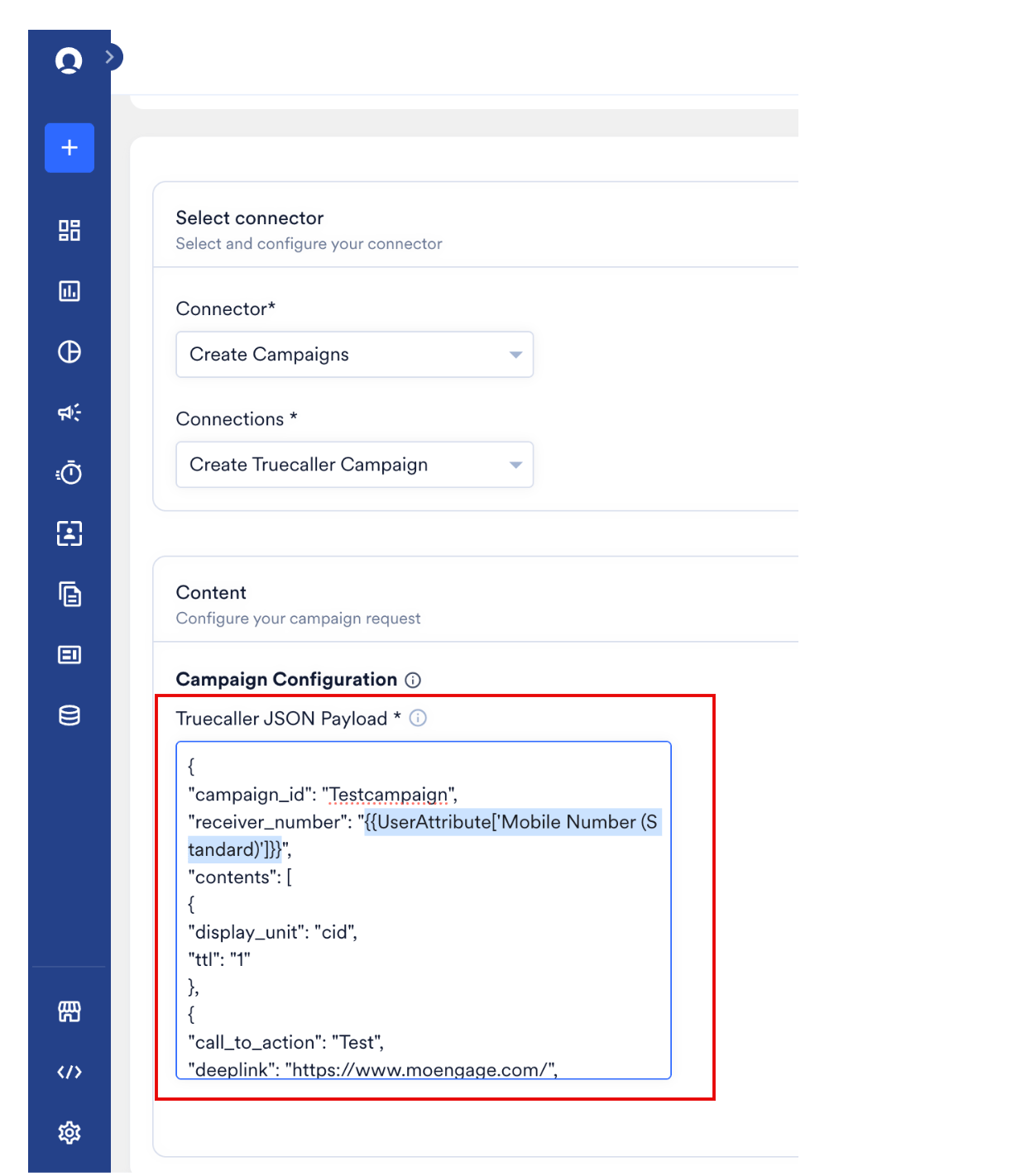
- Your campaign is now ready to be tested and sent to your audience. In the Test Campaign section, you can test your connector configuration:
- In the Select Option list, select the user attribute that represents the recipient’s phone number.
- In the text box, type a test user’s standardized phone number.
- Click Test. If your test user successfully receives the message, your setup is ready.
Note: Phone Number FormattingTruecaller supports mobile numbers formatted in the international E.164 standard. A plus sign (+) prefix with the country code, such as
+15550123456, is also accepted.